Pickup Truck Nissan Frontier Review: Can the 2026 Model Do It All?
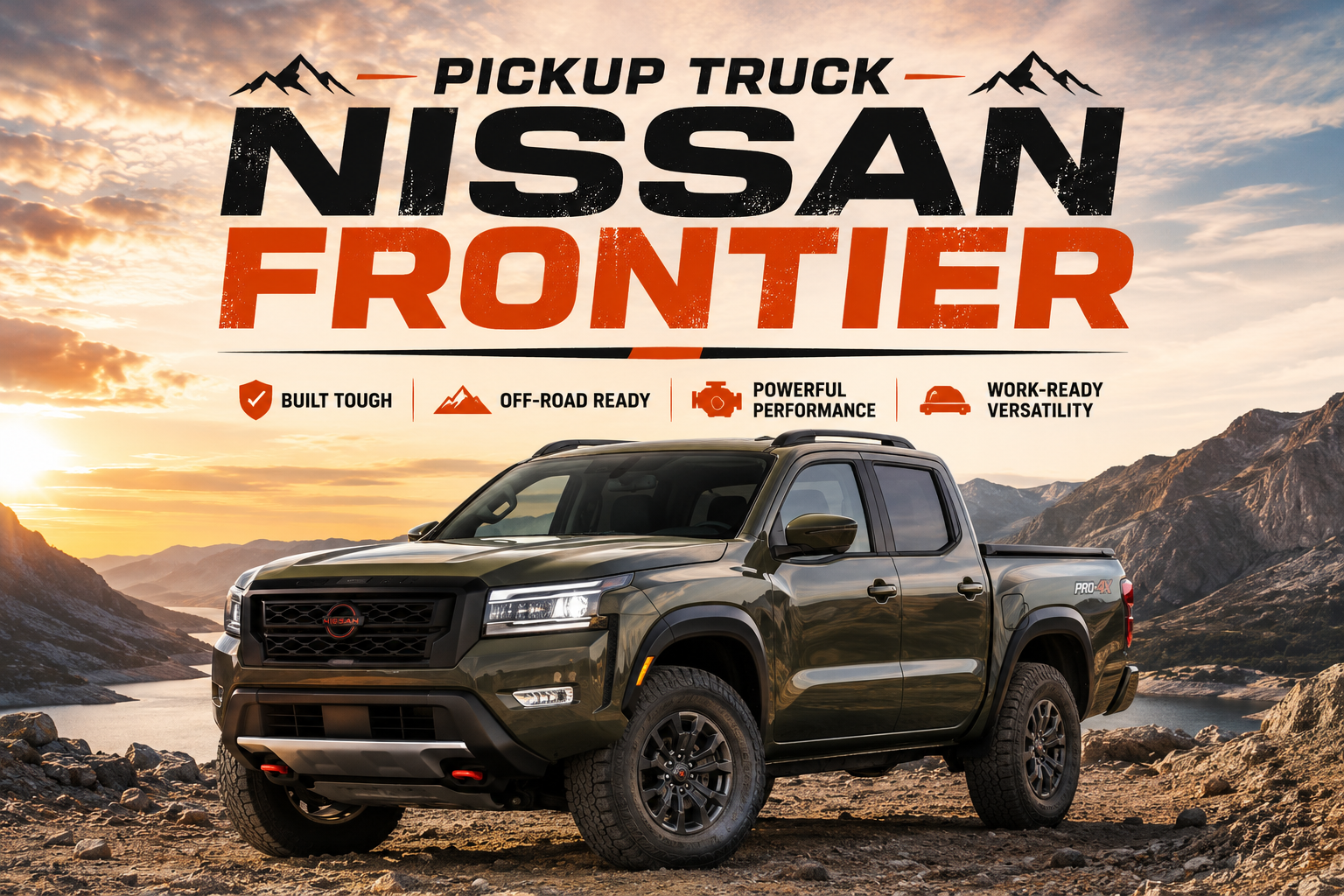
A one-truck-garage guide to price, V6 performance, towing, payload, cab choices, bed utility, off-road ability, and daily comfort
A midsize pickup has to satisfy conflicting priorities. It must be tough enough for lumber, landscaping equipment, trailers, and rough roads, yet manageable enough for parking lots, commuting, school runs, and weekend travel. The 2026 Nissan Frontier takes a straightforward route, using a naturally aspirated V6, a conventional automatic transmission, a fully boxed frame, and a wide range of cab, bed, drivetrain, and trim combinations.
The pickup truck Nissan Frontier is most appealing to buyers who value simplicity and useful capability over hybrid technology, extreme horsepower, or a luxury-grade cabin. This review puts the Frontier through a practical one-truck-garage test, asking whether it can handle work during the week, family duties after hours, and outdoor trips on the weekend without becoming unnecessarily expensive or complicated.
| KEY TAKEAWAYS
· Every 2026 Frontier uses a 310-horsepower 3.8-liter V6 and a nine-speed automatic transmission. · The lineup offers rear-wheel drive or four-wheel drive, two cab styles, and five-foot or six-foot beds, depending on configuration. · Maximum towing reaches 7,150 pounds, while maximum payload reaches 1,590 pounds in the highest-capacity configuration. · The Frontier is strong on value, standard power, physical controls, bed utility, and configuration choice. · Its main compromises are tight Crew Cab rear seating, average fuel economy, heavy low-speed steering, and a cabin that feels less modern than some newer rivals. |
2026 Nissan Frontier at a Glance
| Category | 2026 Frontier Details |
| MSRP range | $33,895 to $44,115, according to the reference review |
| Engine | 3.8-liter naturally aspirated V6 |
| Output | 310 hp and 281 lb-ft of torque |
| Transmission | Nine-speed automatic |
| Drivetrain | Rear-wheel drive or selectable four-wheel drive |
| Maximum towing | Up to 7,150 lb, configuration dependent |
| Maximum payload | Up to 1,590 lb, configuration dependent |
| Cab and bed choices | King Cab with six-foot bed; Crew Cab with five-foot or available six-foot bed |
| EPA economy | Up to 19 city, 24 highway, and 21 combined mpg |
| Best all-around trim | SV Crew Cab for comfort and value; PRO-4X for regular trail use |
The One-Truck-Garage Test
The Frontier makes the most sense when one vehicle must cover several roles. It is smaller and easier to place than a full-size truck, but its body-on-frame construction, standard V6, available four-wheel drive, and legitimate tow ratings allow it to do more than a crossover-based pickup. Buyers can also choose a work-oriented King Cab, a family-friendlier Crew Cab, a short bed for easier maneuvering, or a long bed for bulky cargo.
That flexibility is one of the Frontier’s strongest advantages. Many competitors restrict certain cabs, beds, or drivetrains to a narrow group of trims. Nissan still gives buyers several ways to configure the truck around a real need. The tradeoff is that no single configuration maximizes everything. The model with the most passenger room does not have the highest payload, and the most trail-ready PRO-4X is not the most efficient or capable towing version.
Car and Driver describes the Frontier as an affordable and highly configurable workhorse, awarding it an 8 out of 10 rating. Its 2026 Nissan Frontier review also praises the standard V6 and easy-to-use physical controls, while noting that the rear seat is cramped and some newer rivals offer more polished interiors or stronger maximum tow ratings.
V6 Performance: Old-School in a Useful Way
The 3.8-liter V6 is the center of the Frontier’s personality. It produces 310 horsepower and 281 lb-ft of torque, sending power through a nine-speed automatic. There is no smaller base engine and no expensive hybrid upgrade. Every buyer receives the same core powertrain, whether choosing a basic rear-drive truck or a four-wheel-drive PRO-4X.
Acceleration is confident rather than dramatic. The engine responds naturally when the accelerator is pressed, and the transmission generally keeps the V6 in a useful part of its power band. This can feel more predictable than a small turbo engine that delivers a sudden rush of torque. Drivers who tow, merge onto fast highways, or frequently carry cargo should appreciate the powertrain’s straightforward response.
The Frontier does not feel carlike in every situation. Its steering can feel heavy during tight parking maneuvers, and the truck’s solid rear axle can produce some movement over broken pavement when the bed is empty. At highway speed, however, it settles into a stable rhythm. The driving experience suits people who want a traditional pickup feel without stepping up to the size and cost of a half-ton truck.
Nissan lists the 310-horsepower V6, fully boxed frame, available four-wheel drive, and trail-focused equipment in its official Frontier performance and capability guide. The same source confirms maximum ratings of up to 7,150 pounds for towing and up to 1,590 pounds for payload, with actual capacity changing according to cab, bed, trim, and drivetrain.
Towing: Read the Configuration, Not Just the Headline
A maximum tow rating is useful only when it matches the truck a buyer intends to purchase. The Frontier’s 7,150-pound peak applies to a specific King Cab rear-drive configuration. A Crew Cab with four-wheel drive, a long bed, or the heavier PRO-4X hardware will have a lower rating. This matters because the popular version on a dealer lot may not match the number used in advertising.
For a small boat, utility trailer, pair of motorcycles, compact travel trailer, or landscaping equipment, the Frontier can be a sensible tow vehicle when properly equipped. Shoppers should confirm the door-jamb payload label, hitch equipment, gross combined weight rating, trailer brakes, and tongue-weight limits for the exact vehicle. Passengers, bed cargo, accessories, and trailer tongue weight all consume payload capacity.
Anyone planning to tow regularly should use a pickup towing capacity checklist before choosing a trim. The checklist should account for real loaded trailer weight rather than brochure dry weight, plus the weight of people, tools, coolers, bed covers, steps, and other accessories carried by the truck.
Towing and Payload by Popular Configuration
| Configuration | Maximum Towing | Maximum Payload | Best Use |
| King Cab S 4×2 | 7,150 lb | 1,590 lb | Highest-capacity work setup |
| King Cab S 4×4 | 7,000 lb | 1,430 lb | Work truck with added traction |
| Crew Cab S 4×2 | 7,070 lb | 1,490 lb | Passengers plus strong capability |
| Crew Cab SV 4×4 | 6,880 lb | 1,310 lb | Balanced daily driver and tow vehicle |
| Crew Cab PRO-4X | 6,680 lb | 1,220 lb | Off-road use with moderate towing |
| Crew Cab Long Bed PRO-4X | 6,270 lb | 1,100 lb | Trail equipment and longer cargo |
Choosing the Right Cab and Bed
The King Cab is the work-focused choice. It seats four in theory, but the small rear area is better treated as secure interior storage or occasional seating. Its six-foot bed and lighter curb weight help it deliver the Frontier’s strongest payload and towing figures. Contractors, maintenance crews, and buyers who rarely carry rear passengers may find it the most efficient way to buy capability.
The Crew Cab provides four conventional doors and seating for five. It is the better choice for families and anyone who regularly carries coworkers or friends, but adults may find the 33.2 inches of rear legroom tight on longer trips. The standard five-foot bed keeps overall length manageable, while an available six-foot bed adds cargo room at the cost of a longer body and wider turning needs.
The bed itself is designed for practical use. Available features include a spray-in bedliner, LED lighting, a household-style power outlet, and the Utili-track channel system with movable cleats. These features can matter more than headline horsepower for owners who repeatedly secure tools, bikes, camping equipment, or home-improvement supplies.
Shoppers who are still deciding between a midsize truck and a larger model can compare ownership tradeoffs in a midsize versus full-size pickup guide. A midsize pickup is easier to park and usually costs less, while a full-size truck provides more cabin room, payload margin, and towing headroom for demanding trailers.
Trim Guide: S, SV, PRO-X, or PRO-4X?
| Trim | Core Character | Best For | Watch For |
| S | Basic work truck with standard V6 power | Fleet use, jobsite duty, budget buyers | Fewer comfort and bed convenience features |
| SV | More comfort and broader option availability | Most daily drivers and mixed-use owners | Options can raise the price quickly |
| PRO-X | Rear-drive appearance and handling package | Street-focused buyers who like the rugged look | Not a substitute for four-wheel drive |
| PRO-4X | Four-wheel drive, Bilstein shocks, locking rear differential, skid plates | Frequent trail use, snow, camping access | Lower mpg, payload, and towing than lighter versions |
The SV Crew Cab is the most broadly useful configuration. It combines a proper rear seat with better convenience features and access to towing and bed packages, without automatically paying for specialized off-road hardware. A rear-drive SV can also deliver the best fuel economy if four-wheel drive is unnecessary.
The PRO-X is primarily for buyers who want the more aggressive appearance and upgraded on-road personality without four-wheel drive. The PRO-4X is the functional trail trim. It adds Bilstein shocks, an electronic locking rear differential, all-terrain tires, skid plates, hill-descent control, and terrain-focused camera technology. Those upgrades are worthwhile for owners who actually use rough trails, but they create compromises in efficiency and maximum capacity.
Interior and Technology: Functional Before Fancy
The Frontier cabin follows the same no-nonsense philosophy as the powertrain. Physical buttons and knobs make climate, audio, drive-mode, and four-wheel-drive controls easy to use with gloves or while moving over rough roads. Materials are durable and the dashboard design is straightforward, although hard plastics and an older overall layout keep it from feeling as upscale as the newest Tacoma, Colorado, or Canyon.
A 12.3-inch touchscreen is available on better-equipped versions, along with wireless smartphone integration, navigation, connected services, a wireless charger, and a premium Fender audio system. Storage includes large door pockets, a dashboard tray, and under-seat bins on eligible Crew Cab models. The front seats are supportive, but the rear seat remains one of the truck’s clearest limitations.
Fuel Economy and Everyday Cost
Rear-drive versions carry EPA estimates of 19 mpg city, 24 mpg highway, and 21 mpg combined. Standard four-wheel-drive versions fall to 17 mpg city, 21 mpg highway, and 19 mpg combined. The PRO-4X is rated at 16 mpg city, 20 mpg highway, and 18 mpg combined. These figures are reasonable for a naturally aspirated V6 body-on-frame pickup, but buyers focused on fuel savings may prefer a turbo four-cylinder or hybrid rival.
Purchase price is only part of the ownership equation. Four-wheel drive adds mechanical complexity, all-terrain tires can cost more to replace, and dealer-installed accessories can quickly raise the final price. On the other hand, the Frontier’s standard V6 means buyers do not need to pay for a higher trim merely to obtain adequate power. Its conventional controls and proven mechanical layout may also appeal to people who plan to keep a truck well beyond the initial warranty.
Where the Frontier Fits Against Rivals
| Priority | Frontier Strength | A Rival May Be Better When |
| Standard engine power | 310-hp V6 in every trim | You want a high-torque hybrid or performance turbo engine |
| Configuration choice | Two cabs, two bed lengths, rear- or four-wheel drive | You need a specialized high-performance off-road model |
| Simple controls | Physical buttons and conventional layout | You prefer the newest screen-heavy cabin technology |
| Value | Competitive entry price and standard V6 | Fuel economy or resale value is the leading concern |
| Towing | Strong enough for many recreational trailers | Your loaded trailer regularly approaches 7,000 lb |
| Rear-seat comfort | Acceptable for occasional passengers | Adults or child seats occupy the back seat every day |
Who Should Buy the 2026 Frontier?
The Frontier is a strong choice for buyers who want one straightforward midsize pickup that can tow a moderate trailer, carry real bed cargo, handle winter roads, and remain manageable in daily traffic. It is particularly attractive to shoppers who prefer a naturally aspirated V6, conventional buttons, and a range of cab and bed choices.
It is less suitable for someone who needs generous second-row space, class-leading towing, maximum fuel economy, or the newest interior presentation. Buyers who primarily commute and rarely use the bed should also compare crossover-based pickups, which can provide a smoother ride and better economy. Those who tow close to the Frontier’s limit should consider a full-size truck with more capacity margin.
| QUICK BUYING RECOMMENDATION
· Choose the King Cab S if maximum payload, a six-foot bed, and low purchase cost matter more than rear-seat comfort. · Choose the Crew Cab SV for the best balance of passenger access, everyday equipment, and useful towing capability. · Choose the PRO-X when you want rugged styling but do not require four-wheel drive. · Choose the PRO-4X only when its locking differential, skid plates, all-terrain tires, and trail suspension will be used regularly. · Confirm the exact towing and payload labels on the truck before signing, especially when adding passengers, accessories, or a trailer. |
Frequently Asked Questions
Is the Nissan Frontier a good pickup truck?
Yes, for buyers who value standard V6 power, useful towing, a durable body-on-frame design, and configuration choice. It is not the most refined or efficient midsize truck, but it offers a practical balance of price and capability.
How much can a 2026 Nissan Frontier tow?
The maximum published rating is 7,150 pounds for a specific King Cab rear-drive model. Crew Cab, four-wheel-drive, long-bed, and PRO-4X versions have lower ratings. Always verify the exact configuration and account for passengers, cargo, tongue weight, and accessories.
Does the Frontier have a four-cylinder engine?
No. Every 2026 Frontier uses a 3.8-liter naturally aspirated V6 with 310 horsepower and a nine-speed automatic transmission.
Is the PRO-4X worth buying?
The PRO-4X is worthwhile for drivers who regularly use rocky trails, loose surfaces, snow-covered access roads, or remote campsites. Buyers who mainly stay on pavement may receive better fuel economy, payload, towing, and value from an SV.
Can adults fit in the Frontier Crew Cab rear seat?
Adults can fit, but the rear seat is tight compared with a full-size pickup and some midsize competitors. It works best for children, occasional adult passengers, or shorter trips. Families should test child-seat installation and front-seat clearance before purchasing.
Final Verdict
The 2026 Nissan Frontier succeeds because it does not pretend to be every type of truck. It delivers strong standard power, honest body-on-frame capability, useful bed features, and enough configuration choice to serve contractors, homeowners, campers, and everyday drivers. The SV Crew Cab is the best all-around version for most buyers, while the King Cab S and PRO-4X serve clearer work and trail missions.
Its tight back seat, ordinary fuel economy, and less polished cabin prevent it from leading the midsize class. Still, shoppers who want a capable truck without a complex powertrain or an inflated luxury price may find the Frontier’s direct, practical character more valuable than a longer feature list.