 By
How to compare 2026 prices, trims, transmissions, packages, dealer listings, and used examples in the United States
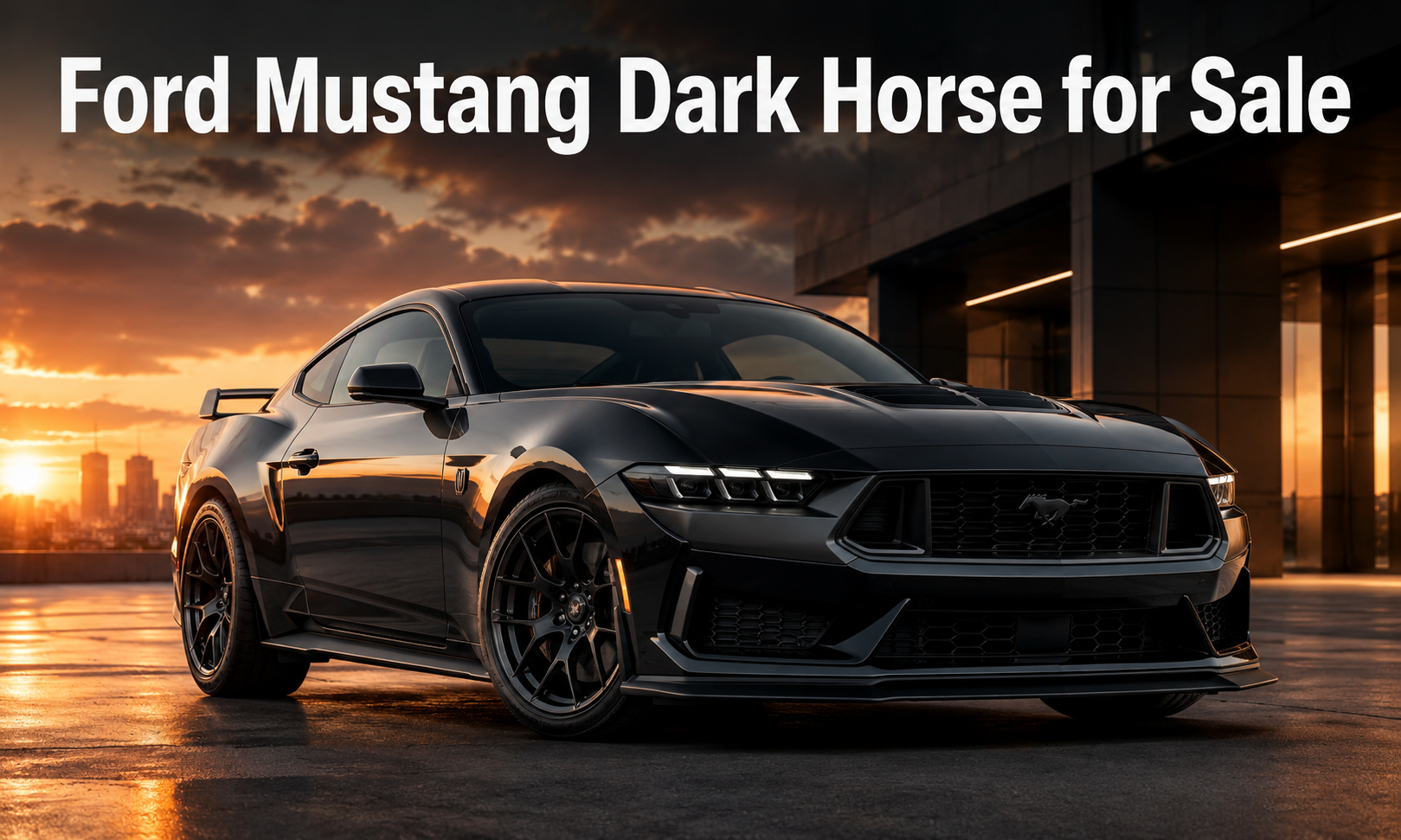
Searching for a Ford Mustang Dark Horse for sale is not just about finding the lowest advertised number. The right purchase depends on whether the car is a standard Dark Horse or Dark Horse Premium, whether it has the six-speed manual or 10-speed automatic, which track-focused options are included, and how dealer fees affect the final out-the-door price.
For 2026, Ford lists the standard Dark Horse from $64,080 and the Dark Horse Premium from $69,570 before destination, taxes, registration, options, and dealer charges. Both use a modified naturally aspirated 5.0-liter Coyote V-8 rated at 500 horsepower and 418 lb-ft of torque. That puts the Dark Horse in a distinct position between the Mustang GT and the far more expensive supercharged Dark Horse SC.
Key Takeaways
| • The 2026 Mustang Dark Horse starts at $64,080, while the Dark Horse Premium starts at $69,570 before fees and options.
• Both trims use a 500-hp, 5.0-liter V-8 and rear-wheel drive, with a six-speed manual available and a 10-speed automatic offered. • A low advertised price can become expensive after dealer add-ons, market adjustments, financing products, taxes, and documentation fees. • The Handling Package is valuable for serious track use, but its wider summer tires and aggressive setup may add replacement cost and reduce cold-weather practicality. • Used Dark Horse cars should be checked for track use, modifications, tire wear, over-revs, collision repair, and remaining warranty coverage. |
What Does a 2026 Ford Mustang Dark Horse Cost?
| 2026 Model | Starting MSRP | Best Fit |
| Mustang GT Fastback | $47,795 | Buyers who want a V-8 Mustang without the full Dark Horse track hardware |
| Mustang GT Premium | $52,075 | Drivers prioritizing comfort and cabin features |
| Mustang Dark Horse | $64,080 | Enthusiasts who want the 500-hp engine and serious chassis upgrades |
| Mustang Dark Horse Premium | $69,570 | Buyers who want Dark Horse performance with a more upscale cabin |
| Mustang Dark Horse SC | $106,585 | Shoppers seeking a supercharged, track-focused flagship below the GTD |
MSRP is the starting point, not the purchase price. A listing may include premium paint, appearance packages, Recaro seats, the Handling Package, an automatic transmission, dealer-installed accessories, or a market adjustment. Always request a written buyer’s order that separates vehicle price, destination charge, sales tax, registration, documentation fee, accessories, protection products, and financing items.
Ford’s current 2026 Mustang Build and Price tool is useful for confirming the factory starting price and seeing how options change the configured MSRP before comparing dealer advertisements.
What Makes the Dark Horse Different From a Mustang GT?
The Dark Horse is more than a cosmetic package. Its modified 5.0-liter V-8 produces 500 horsepower, compared with lower outputs in regular GT configurations. It also adds track-focused cooling, larger Brembo brakes, a Torsen limited-slip differential, MagneRide adaptive dampers, heavier-duty front springs, unique chassis tuning, launch control, selectable drive modes, and distinctive body details.
| Area | Dark Horse Advantage | Why It Matters |
| Engine | 500-hp modified 5.0-liter Coyote V-8 | Delivers the most powerful naturally aspirated 5.0-liter production Mustang output in the standard lineup |
| Brakes | Six-piston front Brembo calipers with large rotors | Improves repeated stopping performance during aggressive driving |
| Cooling | Engine-oil, transmission, and differential cooling hardware | Helps manage heat during track sessions and sustained high-load use |
| Differential | Torsen limited-slip rear differential | Improves power delivery and traction when exiting corners |
| Suspension | MagneRide and Dark Horse-specific tuning | Balances road comfort with firmer track capability |
| Cabin | 12.4-inch digital cluster and 13.2-inch center display | Provides configurable performance information and modern connectivity |
The official 2026 Mustang Dark Horse model page provides the current equipment list, available colors, wheel and tire specifications, safety features, and package information.
Should You Buy the Dark Horse or Dark Horse Premium?
The standard Dark Horse is usually the stronger value for a driver focused on performance. It already includes the core engine, brakes, cooling, differential, adaptive suspension, and chassis upgrades. The Premium version is aimed at shoppers who want more comfort, appearance choices, and cabin refinement without stepping away from the same basic performance foundation.
| Question | Choose Dark Horse | Choose Dark Horse Premium |
| Is price control the priority? | Yes | Only if the added cabin features justify the premium |
| Will the car see frequent track use? | Often the better starting point | Still capable, but comfort options may matter less |
| Is it a daily driver? | Works well if the standard interior is acceptable | Better for buyers who value convenience and upscale materials |
| Are you shopping for resale appeal? | Manual and desirable packages may attract enthusiasts | Premium equipment can broaden buyer interest |
Is the Manual or Automatic Dark Horse Better?
The six-speed Tremec manual is the enthusiast choice because it provides more involvement, rev matching, and a traditional muscle-car experience. It may also hold special appeal in the used market as manual V-8 performance cars become less common. The 10-speed automatic is easier in traffic and can deliver quick, consistent acceleration without requiring perfect launches or shifts.
Before choosing, drive both. The manual’s clutch effort, shifter feel, highway gearing, and daily usability should be judged personally. Automatic shoppers should test low-speed behavior, paddle response, and whether the transmission holds the desired gear during aggressive driving. Neither choice is universally better. The correct transmission is the one that matches how the car will actually be used.
Is the Dark Horse Handling Package Worth Buying?
The available Handling Package is aimed at drivers who expect to use the car on a road course or who want the most aggressive standard Dark Horse setup. Ford lists wider 19-inch wheels, 305-section front and 315-section rear Michelin tires, adjustable front strut top mounts, front tow hooks, a larger front aero element, a performance rear spoiler with a Gurney flap, revised chassis tuning, and MagneRide calibration.
Those upgrades can be worthwhile on track, but they carry real ownership tradeoffs. Wide performance tires are expensive, can wear quickly, may follow road grooves, and are unsuitable for freezing temperatures or snow. Buyers who mainly commute may prefer the standard wheel and tire setup, then purchase a separate track wheel package later.
How Can You Compare New Dark Horse Listings?
Dealer websites often display prices differently. One listing may show MSRP, another may subtract incentives that not every buyer qualifies for, and another may include a discount only when financing through a specific lender or trading a vehicle. Compare every car on the same out-the-door basis.
- Match the VIN and window sticker to the exact vehicle being advertised.
- Confirm whether the price requires dealer financing, a trade-in, loyalty status, military eligibility, or another conditional incentive.
- Ask whether a market adjustment or mandatory accessory package will be added.
- Check the transmission, equipment group, Handling Package, seats, paint, stripes, wheels, and tire type.
- Request the complete buyer’s order before traveling to the dealership.
- Compare the interest rate and total finance charge, not only the monthly payment.
- Confirm whether the vehicle has been used for demonstrations, events, or extended test drives.
Is a Used Mustang Dark Horse a Better Deal?
A lightly used Dark Horse can reduce the initial purchase price and may include expensive options without their full original cost. It can also be riskier than an ordinary used coupe because the model invites hard acceleration, burnouts, track days, modifications, and rapid tire wear.
| Inspection Area | What to Check |
| Service history | Oil-change dates, fluid service, recall work, warranty repairs, and dealer records |
| Engine and transmission | Cold start, warning lights, unusual noises, clutch condition, shift quality, leaks, and modifications |
| Tires and brakes | Uneven wear, track heat cycles, damaged wheels, rotor cracks, pad life, and mismatched tires |
| Body and underside | Paintwork, panel alignment, splitter damage, tow-hook use, curb contact, and underbody scrapes |
| Electronics | Drive modes, MagneRide, active exhaust, cameras, screens, sensors, and Track Apps |
| Ownership history | Collision reports, title status, number of owners, fleet use, and remaining factory warranty |
A pre-purchase inspection by a Ford performance specialist is worth the cost. Ask the technician to look for aftermarket tuning, non-factory exhaust or intake changes, evidence of repeated track use, over-rev data where available, and warranty implications. A clean vehicle-history report does not prove that the car was never damaged or driven hard.
What Dealer Add-Ons Should You Question?
Some add-ons may be useful, but they should be optional, clearly priced, and evaluated separately from the car. Common examples include paint protection, ceramic coating, nitrogen-filled tires, wheel locks, GPS recovery devices, window tint, extended warranties, prepaid maintenance, tire-and-wheel coverage, and credit insurance.
Ask for the cash price of each product and read the cancellation terms. A small monthly increase can hide thousands of dollars over a long loan. The best negotiation sequence is usually vehicle price first, trade-in second, financing third, and optional products last.
How Much Should You Budget Beyond the Purchase Price?
The Dark Horse’s 500-hp V-8, premium fuel needs, performance tires, large brakes, insurance classification, and potential track use can make ownership more expensive than the monthly loan payment suggests. Obtain an insurance quote using the exact VIN before buying. Also price replacement tires, brake pads, annual registration, scheduled maintenance, fuel, winter storage, and any track-day consumables.
Buyers in cold-weather states should plan for an appropriate winter tire setup or seasonal storage. Summer performance tires can lose traction as temperatures drop, even when roads are dry. A second wheel-and-tire set may be safer and may preserve the original equipment.
How Should You Test-Drive a Dark Horse?
- Inspect the car in daylight before the engine is started.
- Start it cold and listen for abnormal ticking, rattling, or exhaust noises.
- Check every drive mode, active exhaust setting, screen, camera, and driver-assistance feature.
- Test steering tracking, brake feel, clutch engagement or automatic shift quality, and suspension behavior on ordinary roads.
- Look for vibration at highway speed and listen for wheel-bearing or tire noise.
- After the drive, check for fresh fluid leaks, warning messages, unusual smells, and excessive brake heat.
Who Should Buy a Ford Mustang Dark Horse?
The Dark Horse makes the most sense for a buyer who wants a naturally aspirated V-8, rear-wheel drive, serious track-capable hardware, and a choice between manual and automatic transmissions. It is less suitable for someone who needs rear-seat comfort, all-weather traction, low operating costs, or a quiet luxury coupe.
A Mustang GT may be the smarter value when most driving will happen on public roads and the Dark Horse cooling, brakes, and chassis upgrades will rarely be used. At the other end, the Dark Horse SC is a separate, far more expensive supercharged model. Shoppers should not confuse an ordinary Dark Horse listing with the SC simply because both use similar branding.
Frequently Asked Questions
How much is a 2026 Ford Mustang Dark Horse?
Ford lists the standard 2026 Dark Horse from $64,080 and the Dark Horse Premium from $69,570 before destination, options, taxes, registration, and dealer fees.
How much horsepower does the Dark Horse have?
The 2026 Dark Horse uses a modified naturally aspirated 5.0-liter Coyote V-8 rated at 500 horsepower and 418 lb-ft of torque.
Does the Mustang Dark Horse come with a manual transmission?
Yes. A six-speed Tremec manual with rev matching is available. A 10-speed automatic is also offered.
Is the Dark Horse faster than the Mustang GT?
It has more power and more track-focused hardware than a standard GT. Actual acceleration depends on transmission, tires, conditions, driver, and testing method.
Can you daily-drive a Mustang Dark Horse?
Yes, especially without the most aggressive tire setup. Buyers should still consider fuel, insurance, rear-seat space, ride quality, winter traction, and tire cost.
Will a Dark Horse hold its value?
Desirable color, manual transmission, factory options, low mileage, original condition, and complete records may help. Future resale value is never guaranteed.
Should I pay above MSRP?
That depends on local availability and personal urgency, but buyers should compare multiple dealers and calculate the full out-the-door amount before accepting a market adjustment.
The Bottom Line
Finding the right Ford Mustang Dark Horse for sale requires more than sorting listings from lowest to highest price. Verify the exact trim, transmission, packages, window sticker, warranty status, dealer conditions, and out-the-door total. For used cars, condition and history can matter more than a small difference in mileage.
The standard Dark Horse delivers the essential 500-hp V-8 and track hardware, while the Premium adds comfort and appearance features. Buyers who compare configurations carefully, inspect the car thoroughly, and negotiate each part of the transaction separately are more likely to get the performance car they want without paying for surprises.




Comments