
 By
By 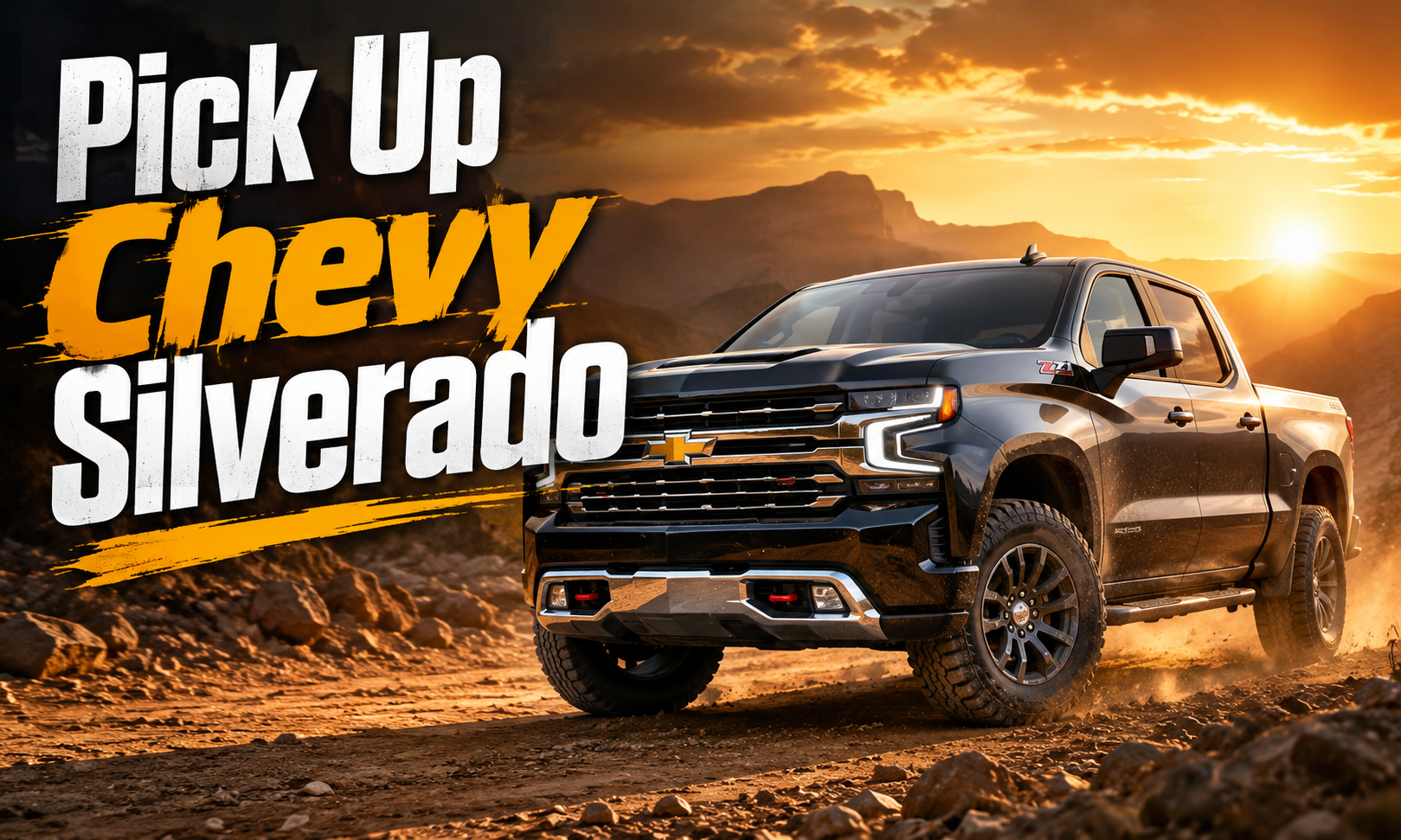
A practical guide to engines, cabs, beds, trims, towing, off-road hardware, pricing, and whether to wait for the redesigned 2027 model
| 2026 CHEVROLET SILVERADO 1500 AT A GLANCE | |
| Vehicle type | Full-size light-duty pickup truck, also called a half-ton pickup |
| Current model focus | 2026 Silverado 1500; the fully redesigned 2027 model is expected late in calendar year 2026 |
| Cab choices | Regular Cab, Double Cab, and Crew Cab |
| Engine choices | 2.7L TurboMax four-cylinder, 5.3L V8, 6.2L V8, and 3.0L Duramax turbo-diesel inline-six |
| Power range | 305 to 420 horsepower; 383 to 495 lb-ft of torque, depending on engine |
| Maximum advertised towing | Up to 13,300 pounds in a specific configuration, not every Silverado |
| Maximum advertised payload | Up to 2,260 pounds; the door-jamb label on the exact truck is the controlling number |
| 2026 advertised base MSRP | $36,900 before destination, options, taxes, and dealer charges |
| Best all-around configuration | LT Crew Cab 4WD with the 5.3L V8 for broad availability, useful technology, and balanced capability |
| The 30-second recommendation
Buy a 2026 LT Crew Cab 4WD with the 5.3L V8 if you want one truck for family use, home projects, winter driving, and moderate towing. Choose the Duramax if you cover long highway distances or tow frequently. Choose a Trail Boss only when the lift and off-road hardware solve a real need. Wait for the 2027 model if a modern digital cabin, new V8s, and the latest design matter more than current incentives. |
Before you pick up Chevy Silverado keys at a dealership, decide what the truck must carry, how often it will tow, who will sit in the rear seat, and where it must park. The Silverado lineup is broad enough that two trucks wearing the same badge can feel like different products, with major changes in engine, cab, bed, suspension, technology, payload, and price.
This guide approaches the Silverado as a build sheet rather than a single vehicle. The correct buying order is model-year timing, real-world job, engine, cab and bed, trim, then options. Starting with exterior color or monthly payment often produces an expensive truck that is less useful than a simpler configuration.
Decision 1: Buy a 2026 Silverado Now or Wait for the 2027 Redesign?
This is the most important timing question in July 2026. The 2026 Silverado is the mature version of the current generation, while Chevrolet has confirmed a fully redesigned 2027 Silverado for late 2026. Pricing and final capability numbers for the 2027 truck have not yet been announced.
| Choice | Reasons it makes sense | Trade-offs | Best buyer |
| Buy 2026 now | Known engines and packages, broad inventory, potential incentives, proven configuration choices | Older cabin design, immediate depreciation when the redesign reaches dealers | Buyer who needs a truck now or can negotiate a strong discount |
| Wait for 2027 | New exterior, standard 16.3-inch center display and 12.2-inch driver display, new 5.7L and 6.6L V8s, expanded Super Cruise availability | Unknown pricing, early availability limits, little discounting, first-year redesign risk | Buyer who keeps trucks many years and values technology or the newest powertrains |
| Buy lightly used 2023-2025 | Lower purchase price, familiar powertrains, abundant Crew Cab inventory | Condition and warranty vary; option combinations can be hard to find | Value-focused buyer who can inspect service history carefully |
| A redesign changes the negotiation
A discounted 2026 can still be the better financial decision. Compare the actual out-the-door price, loan rate, trade value, and equipment rather than assuming the newer model is automatically worth more. A small discount may not offset the older design, while a large discount can make the 2026 compelling. |
Decision 2: Define the Job Before Choosing a Trim
A full-size pickup is easiest to configure when the primary use is written in one sentence. The sentence should include the heaviest trailer, typical passengers, cargo type, annual mileage, winter needs, and parking limits. The table below converts common use cases into a sensible starting point.
| Primary use | Starting configuration | Engine direction | Trim direction | Avoid paying for |
| Jobsite and fleet duty | Regular or Double Cab, longest practical bed, 2WD or 4WD by region | TurboMax for general work; 5.3L for heavier mixed use | WT | Luxury materials and large appearance packages |
| Family daily driver | Crew Cab, short bed, 4WD in snow states | 5.3L V8 or TurboMax | LT or RST | Maximum-tow hardware unless a trailer requires it |
| Frequent highway towing | Cab and bed chosen around payload and wheelbase | 3.0L Duramax or 6.2L V8 | LT, RST, LTZ, or High Country | Oversized wheels that reduce tire comfort and may affect ratings |
| Weekend off-road travel | Crew Cab 4WD | 5.3L, Duramax, or 6.2L by trim and route | LT Trail Boss or ZR2 | ZR2 pricing if gravel roads are the toughest terrain |
| Luxury commuting and towing | Crew Cab 4WD, short or standard bed | 5.3L, Duramax, or 6.2L | High Country | Off-road tires unless routinely needed |
| Street-focused style and performance | Crew Cab short bed | 6.2L V8 | RST | Lifted suspension and mud-terrain tires |
Decision 3: Choose the Engine by Duty Cycle
The Silverado has four distinct engine personalities. Horsepower matters for acceleration, while torque and gearing matter more for moving weight. Fuel type, transmission, availability, and resale also change the ownership experience.
| Engine | Output | Transmission | Best at | Tow ceiling cited for 2026 | Main advantage | Main compromise |
| 2.7L TurboMax I-4 | 310 hp, 430 lb-ft | 8-speed automatic | General work, commuting, value builds | Up to about 9,500 lb | Strong standard torque and lower entry cost | Four-cylinder sound and lower tow ceiling |
| 5.3L EcoTec3 V8 | 355 hp, 383 lb-ft | 10-speed automatic | Balanced daily use, moderate towing, broad trim availability | Up to about 11,500 lb | Traditional V8 feel and easy availability | Less torque and efficiency than the diesel |
| 6.2L EcoTec3 V8 | 420 hp, 460 lb-ft | 10-speed automatic | Acceleration, heavy towing, premium or sport builds | Up to 13,300 lb in a qualifying configuration | Strongest acceleration in the 2026 lineup | Premium fuel, higher purchase price and fuel cost |
| 3.0L Duramax I-6 diesel | 305 hp, 495 lb-ft | 10-speed automatic | Long-distance driving, frequent towing, torque-focused use | Up to 13,300 lb in a qualifying configuration | Highest torque and up to 28 mpg highway | Diesel price premium, emissions-system complexity, DEF |
For a road-test perspective, Car and Driver’s 2026 Chevrolet Silverado 1500 review praises the truck’s tidy handling and broad engine selection, while noting that the cabin is not as polished as the newest rivals. Its testing also shows the 6.2L V8 delivering much quicker acceleration than the diesel, which favors smoothness and torque instead.
When the TurboMax Is the Smart Choice
The TurboMax is not a weak base engine. Its 430 lb-ft torque rating exceeds the 5.3L V8, and it suits contractors, homeowners, and commuters who want useful capability without paying for a V8 or diesel. It is less attractive for buyers who tow near the upper end of the half-ton class or strongly prefer V8 sound and response.
Why the 5.3L V8 Is the Default Recommendation
The 5.3L is the easiest engine to recommend to a broad audience because it combines familiar operation, a 10-speed automatic, strong availability, and useful towing. It does not lead the lineup in torque, speed, or fuel economy, but it avoids the most expensive trade-offs of the other choices.
Who Should Pay for the 6.2L V8
Buy the 6.2L when effortless acceleration, passing power, and a strong gasoline towing experience are priorities. It makes sense in an RST, LTZ, High Country, Trail Boss, or ZR2 only when the buyer will appreciate the extra performance. A shopper who drives gently and rarely tows may spend thousands without using its advantage.
When the Duramax Diesel Earns Its Premium
The Duramax becomes more compelling as annual highway mileage and towing frequency increase. Its 495 lb-ft of torque arrives in a relaxed way, and its best EPA highway rating reaches 28 mpg. Short-trip drivers should think carefully because modern diesel emissions systems generally prefer regular fully warmed operation.
Chevrolet lists the full 2026 engine availability, advertised towing, payload, trim pricing, trailering cameras, bed features, and safety equipment on its official Silverado 1500 model page. Use that information to create a shortlist, then confirm the exact truck’s window sticker, tire and loading label, and trailering documentation because maximum ratings do not apply to every cab, bed, axle, wheel, and option combination.
Engine Cost Logic: A Simple Annual-Mileage Test
Fuel prices vary by state and month, so the most useful calculation is personal. Divide annual miles by expected mpg, multiply by local fuel price, and then add any difference in purchase price, maintenance, and financing. A diesel can save fuel while still costing more overall if the truck is driven few miles or purchased with a large premium.
| Example assumption | TurboMax | 5.3L V8 | 6.2L V8 | Duramax diesel |
| Illustrative real-world combined mpg | 18 | 18 | 16 | 23 |
| Gallons per 15,000 miles | 833 | 833 | 938 | 652 |
| Fuel type | Regular gasoline | Regular gasoline | Premium often preferred for best performance | Ultra-low-sulfur diesel plus DEF |
| What can change the result | 4WD, tires, load, idling | Tow frequency, wheel size | Driving style, fuel grade, towing | Diesel price, regeneration, cold weather |
Decision 4: Match the Cab and Bed to Real Life
Cab and bed choice affects daily usefulness more than most appearance packages. Crew Cab rear-seat space is valuable for adults and child seats, but it increases length and can reduce payload compared with a simpler configuration. The longest bed is ideal for materials and equipment, yet it can make urban parking and residential garages difficult.
| Configuration | Passenger use | Bed priority | Strengths | Watch-outs | |||
| Regular Cab | One to three occupants, little rear-cabin need | Usually work-focused and maximum bed utility | Lower complexity, useful payload potential, compact cab | Limited passenger flexibility and resale audience | |||
| Double Cab | Occasional rear passengers or work crew | Balances cabin and bed | More manageable than a Crew Cab long configuration | Rear seat is tighter for adults and child-seat loading | |||
| Crew Cab | Frequent adults, family use, pets, secure interior cargo | Usually short or standard bed | Best rear-seat comfort and broad resale demand | Longer, heavier, and often lower payload | |||
| Bed direction | Best for | Daily-life effect | Buying note | ||||
| Short bed | Family use, commuting, recreational cargo | Easiest full-size configuration to park | Still offers a wide bed and strong tie-down system | ||||
| Standard bed | Mixed work, towing, and household use | Longer wheelbase and turning circle | Often the most versatile if garage space allows | ||||
| Long bed | Construction material, farm, fleet, slide-in equipment | Can exceed many residential garages and parking spaces | Measure the garage with the door closed and include hitch accessories | ||||
| Measure before ordering
The 2026 Silverado can range from roughly 211 to 242 inches long, depending on cab and bed. Measure garage depth, garage-door width, driveway slope, workplace parking, and trailer-hitch clearance. A truck that technically fits may still be frustrating if there is no room to walk around it or open the tailgate. |
Decision 5: Choose the Trim by Equipment, Not Status
The Silverado trim ladder mixes work equipment, street style, off-road hardware, and luxury. The advertised starting prices below are useful for orientation, but cab, bed, 4WD, engine, destination, packages, and dealer-installed accessories can raise the window sticker quickly.
| 2026 trim | Advertised base MSRP | Core identity | Best buyer | Common reason to skip |
| WT | $36,900 | Work-focused basics and maximum configuration flexibility | Fleet, contractor, budget buyer | Cabin can feel sparse for family use |
| Custom | $42,400 | Value-oriented appearance and convenience | Buyer wanting a tougher look without LT pricing | Fewer advanced cabin choices than LT |
| LT | $47,900 | Technology and comfort sweet spot | Most mixed-use private buyers | Less visual drama than RST or Trail Boss |
| RST | $51,300 | Street-focused, body-color styling | Urban or suburban buyer, optional 6.2L performance | Style can add cost without more work capability |
| Custom Trail Boss | $52,900 | Lifted off-road look at a lower price | Buyer prioritizing stance and basic trail hardware | Simpler cabin and more tire noise |
| LTZ | $58,000 | Leather, cameras, and premium towing features | Frequent tower wanting comfort and visibility | Price approaches High Country territory after options |
| LT Trail Boss | $59,700 | Off-road hardware with the better LT cabin | Daily driver that also sees real trails | Lift and tires reduce efficiency and ease of entry |
| High Country | $62,900 | Luxury, technology, available Super Cruise with trailering | Long-distance premium truck buyer | Rapid price growth and less upscale feel than some rivals |
| ZR2 | $71,800 | DSSV dampers, lockers, skid plates, off-road bumper | Serious trail use and high-speed rough-road control | Expensive and unnecessary for dirt roads or winter commuting |
Decision 6: Calculate the Actual Trailer, Not the Advertising Maximum
The 13,300-pound maximum is a specific truck and equipment result. A Crew Cab 4WD with luxury options, larger wheels, passengers, and cargo may have a much lower payload and tow rating. Towing decisions should begin with the trailer’s loaded weight, expected tongue weight, and the payload label on the exact truck.
| Step | Number to find | Where to find it | Why it matters | Common mistake |
| 1 | Loaded trailer weight or realistic GVWR | Trailer label, scale ticket, owner records | Determines the load the truck must pull | Using empty or dry trailer weight |
| 2 | Tongue weight | Tongue scale or 10-15% planning estimate for many conventional trailers | Counts against truck payload | Ignoring batteries, propane, water, and front storage |
| 3 | Truck payload | Tire and Loading Information label on driver door jamb | Limits people, cargo, hitch, accessories, and tongue weight | Using the maximum payload from an advertisement |
| 4 | Truck-specific tow rating | Trailering guide, VIN-based documentation, dealer data | Varies with engine, axle, cab, bed, wheels, and packages | Assuming every V8 or diesel has the maximum rating |
| 5 | Axle and combined ratings | Certification label and owner documentation | Protects chassis, axle, and combination limits | Checking only the headline tow number |
Payload Math Example: Why a Half-Ton Can Run Out of Capacity First
Consider an 8,000-pound loaded travel trailer with 12 percent tongue weight. That produces about 960 pounds on the hitch. Add 650 pounds of passengers, a 100-pound weight-distributing hitch, and 200 pounds of cargo. The truck now carries about 1,910 pounds before additional accessories. Many well-equipped Crew Cab 4WD trucks have less payload than that, even if the tow rating appears high enough.
| Item | Illustrative weight | Counts against payload? |
| Trailer tongue weight | 960 lb | Yes |
| Passengers | 650 lb | Yes |
| Weight-distributing hitch | 100 lb | Yes |
| Cargo and accessories | 200 lb | Yes |
| Total payload used | 1,910 lb | Compare with the exact door-jamb label |
| Leave operating margin
A truck that barely fits the ratings on paper may feel tiring in crosswinds, mountains, heat, or emergency maneuvers. Frequent heavy towing is a reason to choose a lower-option, higher-payload Silverado configuration or move to a Silverado 2500HD rather than forcing a half-ton to operate at its limits. |
The Silverado Off-Road Ladder: Z71, Trail Boss, or ZR2?
Not every unpaved road requires a lifted truck. The right off-road level depends on ground clearance, tire durability, approach angle, suspension control, locking differentials, and how much highway comfort you are willing to trade.
| Level | Hardware direction | Best terrain | Daily-road effect | Recommendation |
| 4WD with all-terrain tires | Basic traction and durable tires | Snow, gravel, boat ramps, maintained dirt roads | Least compromise | Enough for many owners |
| Z71 package | Off-road suspension, skid protection, hill-descent and related hardware by configuration | Ranch roads, forest roads, moderate trail use | Small comfort and efficiency cost | Best value when a full lift is not needed |
| Custom or LT Trail Boss | 2-inch factory lift, Z71 hardware, two-speed transfer case, aggressive tires | Ruts, rocks, deeper snow, more frequent trails | Higher step-in, more noise, lower mpg | Choose LT Trail Boss for a better daily cabin |
| ZR2 | DSSV dampers, front and rear electronic lockers, skid plates, off-road bumper, 33-inch tires | Technical trails and fast rough terrain | Highest price and specialized tire cost | Buy only if you will use the hardware |
Interior, Technology, and Daily Use
The current Silverado cabin changes significantly at LT and above. Those trims bring a 13.4-inch center touchscreen and 12.3-inch reconfigurable driver display, while lower trims use a more work-focused layout. The Crew Cab offers generous rear-seat space, but seat comfort and material quality should be judged in person rather than assumed from screen size.
| Feature | Where it matters | Who should prioritize it | Test before buying |
| 13.4-inch touchscreen and 12.3-inch driver display | Navigation, trailer views, vehicle settings | LT and above buyers using the truck daily | Glare, menu speed, physical controls with gloves |
| Up to 14 camera views | Hitching, parking, blind areas around a trailer | Frequent towers and urban owners | Image quality at night and camera activation steps |
| Super Cruise with trailering | Compatible divided roads and long trips | High Country buyer covering interstate miles | Subscription terms, mapped-road coverage, driver monitoring |
| Multi-Flex Tailgate | Bed access, load stops, work surface | Shorter owners, contractors, recreation users | Compatibility with hitch, tonneau cover, and accessories |
| 120-volt bed outlet | Tools, chargers, campsite equipment | Jobsite and outdoor buyers | Available wattage and package requirement |
The Bed May Be the Silverado’s Strongest Everyday Feature
Chevrolet emphasizes the Durabed’s width, cargo volume, and 12 standard tie-downs. The long-bed configuration reaches an advertised 89.1 cubic feet, and an available 120-volt outlet can support tools or recreational equipment. The available Multi-Flex Tailgate has six positions, including a full-width step and load-stop functions.
| Bed item | Why it matters | Inspection test | Potential conflict |
| Tie-down locations | Determines how safely awkward cargo can be secured | Bring straps and check reach from outside the bed | Bed caps, toolboxes, and liners can block access |
| Tailgate step height | Affects daily loading and unloading | Climb in while wearing normal work shoes | Trailer hitch or jack may limit space |
| Tonneau or cap fit | Protects tools and luggage | Confirm exact bed length and rail system | Multi-Flex operation and stake-pocket access |
| Bed outlet | Useful for light tools and chargers | Confirm package and output on window sticker | Not a substitute for a high-output generator |
| Spray-in liner | Protects the bed and adds grip | Inspect coverage around seams and tie-downs | Adds cost and some weight |
Six Silverado Cost Traps to Avoid
- Shopping by monthly payment. Long loan terms can hide a high transaction price and negative equity.
- Buying maximum wheels. Large wheels often cost more, ride harder, and make replacement tires expensive without improving payload.
- Ordering off-road tires for appearance. Mud-terrain tires add noise, weight, and fuel use on pavement.
- Assuming diesel always saves money. Fuel economy is only one part of the purchase, maintenance, DEF, and financing calculation.
- Ignoring payload after accessories. Steps, caps, toolboxes, winches, passengers, and hitch equipment all consume capacity.
- Paying twice for the same function. Appearance packages can bundle wheels, steps, badging, or liners that the dealer also adds separately.
Recommended Silverado Builds by Buyer Type
These are starting points, not universal answers. Availability and package rules can force changes, and the exact payload label must be checked before any towing recommendation is accepted.
| Buyer | Recommended build | Why it works | Option to add | Option to reconsider |
| Best overall | LT Crew Cab 4WD, 5.3L V8 | Comfort, large screens, broad availability, balanced capability | Safety and camera package | 22-inch wheels |
| Best value work truck | WT with TurboMax, cab and bed selected for the job | 430 lb-ft standard torque and low entry price | Trailering package or bed outlet | Luxury appearance accessories |
| Best high-mileage tower | LT or RST Crew Cab with 3.0L Duramax | Strong torque, relaxed highway behavior, best fuel-economy potential | Camera and trailering technology | Short-trip use with little towing |
| Best gasoline performance | RST Crew Cab 4WD with 6.2L V8 | Fast response and street-focused appearance | Appropriate towing package if needed | Lifted suspension for appearance only |
| Best mixed off-road use | LT Trail Boss with 5.3L or Duramax | Factory lift and useful cabin equipment | Skid protection and sensible tire choice | ZR2 unless terrain demands lockers and DSSV dampers |
| Best luxury highway truck | High Country with Duramax or 6.2L | Premium cabin, camera suite, available Super Cruise with trailering | Technology package | Expensive dealer appearance add-ons |
| Best serious off-road truck | ZR2 | Lockers, DSSV dampers, skid plates, off-road bumper | Bison package only for protection needs | Maximum towing expectations |
Is a Used Silverado 1500 the Better Buy?
A one-to-three-year-old Silverado can reduce purchase price while retaining the current-generation cabin and powertrains. Used shopping works best when the buyer values configuration over color. Search by engine, cab, bed, 4WD, trailering package, and payload rather than trim name alone.
| Inspection area | What to check | Why it matters |
| Service history | Oil changes, transmission service, diesel maintenance, recalls, software updates | Heavy towing and long idle time can change wear patterns |
| Tow evidence | Hitch wear, trailer-brake controller use, rear suspension stance, tire wear | A clean cabin does not prove light use |
| Off-road evidence | Skid plates, underbody dents, wheel damage, torn sidewalls, mud in frame areas | Trail Boss and ZR2 trucks may have been used as intended |
| Bed and tailgate | Dents, liner damage, Multi-Flex operation, outlet function, water intrusion under covers | Bed repairs and tailgate components can be costly |
| Payload label and window sticker | Factory equipment, axle, packages, tire size, original capacity | Used listings often omit the details that control towing |
A 30-Minute Dealership Test Plan
- Photograph the window sticker, door-jamb payload label, tire size, and axle information before the test drive.
- Sit in every seat that will be used regularly, including child-seat positions and the center front seat if applicable.
- Drive at city speed, freeway speed, and over broken pavement. Listen for tire noise and note steering effort.
- Test the turning circle in a tight parking lot and back into a realistic space using mirrors and cameras.
- Open the tailgate, climb into the bed, reach the tie-downs, and check whether a trailer hitch blocks the step.
- Pair a phone, test the infotainment response, and activate the trailer or camera views you expect to use.
- Compare the out-the-door price with a second configuration. A lower trim with the right engine may be more useful than a loaded truck with the wrong payload.
Frequently Asked Questions
Is the Chevrolet Silverado 1500 a half-ton pickup?
Yes. The Silverado 1500 is Chevrolet’s full-size light-duty or half-ton pickup. The Silverado 2500HD and 3500HD are heavier-duty trucks with different towing, payload, ride, and ownership characteristics.
What is the best 2026 Silverado engine?
The 5.3L V8 is the best all-around choice for many buyers. The TurboMax is the value choice, the 6.2L is the performance choice, and the 3.0L Duramax is the long-distance torque and efficiency choice.
Which Silverado engine can tow 13,300 pounds?
Chevrolet advertises up to 13,300 pounds with a specific Duramax Double Cab Standard Bed configuration, and other qualifying powertrain configurations may also reach the top range. Always verify the exact truck.
Is the 2.7L TurboMax enough for a full-size pickup?
Yes for many daily, work, and moderate-towing uses. Its 430 lb-ft of torque is substantial, but buyers towing near the class maximum should compare the V8 and diesel configurations.
Is the Duramax diesel worth it?
It is most likely to be worth the premium for high annual mileage, frequent highway travel, or regular towing. Short-trip drivers may not realize enough fuel savings or operating benefit.
What is the best Silverado trim for the money?
LT is the strongest all-around value because it adds the modern dashboard, large displays, and useful options without requiring luxury-trim pricing.
What is the difference between Trail Boss and ZR2?
Trail Boss provides a factory lift, Z71 hardware, a two-speed transfer case, and aggressive tires. ZR2 adds Multimatic DSSV dampers, front and rear electronic lockers, stronger skid protection, and a specialized off-road bumper.
Can Super Cruise work while towing?
The 2026 High Country offers available Super Cruise with trailering on compatible roads. The driver must meet system requirements, remain attentive, and understand mapped-road and operating limitations.
Should I buy a 2026 Silverado or wait for 2027?
Buy 2026 for known equipment, immediate need, and potential discounts. Wait for 2027 for the new cabin, new V8 family, updated design, and broader technology, assuming you can accept unknown pricing and early supply.
How much payload does a Silverado 1500 have?
Chevrolet advertises up to 2,260 pounds, but the usable payload of the exact truck may be much lower. The driver-door Tire and Loading Information label is the number to use.
Does a Crew Cab reduce towing or payload?
It can. Crew Cabs are heavier and often carry more options and passengers, which can reduce payload and may change towing ratings compared with a lighter cab and bed combination.
Is a Silverado 2500HD better for towing?
It is often the safer choice for frequent heavy trailers, high tongue weight, large families, or bed accessories. The trade-offs are a firmer ride, larger dimensions, higher price, and greater operating cost.
Bottom Line
The best time to pick up Chevy Silverado ownership is after the configuration has been proven on paper and in a test drive. For most American buyers, an LT Crew Cab 4WD with the 5.3L V8 is the safest all-around answer, while the Duramax serves frequent highway towers, the TurboMax delivers value, and the 6.2L rewards performance-focused drivers.
Do not let a maximum tow rating, oversized wheel package, or attractive monthly payment replace the useful numbers. Check the exact payload label, trailer weight, tongue weight, cab fit, bed length, garage space, fuel needs, and out-the-door price. Then compare the discounted 2026 truck with the redesigned 2027 model expected later in 2026.
| Publishing note
This article reflects publicly available US-market information checked in July 2026. Chevrolet can change prices, packages, ratings, and availability. Readers should verify the exact vehicle identification number, Monroney label, payload label, owner documentation, and dealer quote before purchasing or towing. |











Comments