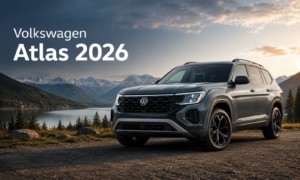
Volkswagen Atlas 2026: Price, Specs, Trims, and Review
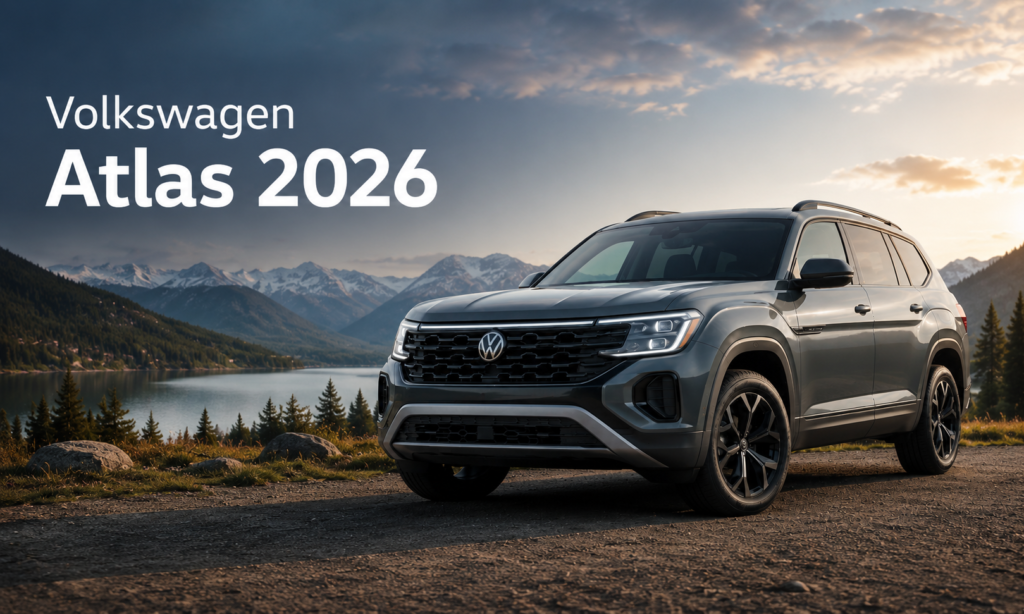
A practical family-SUV audit covering third-row space, cargo room, towing, performance, trim value, technology, and the reasons to buy or skip it
| 2026 Atlas fact | Details |
| Vehicle class | Midsize three-row crossover SUV |
| Seating | Seven with the second-row bench, or six with optional captain chairs |
| Engine | 2.0-liter turbocharged four-cylinder |
| Output | 269 horsepower and 273 lb-ft of torque |
| Transmission | Eight-speed automatic |
| Drivetrains | Front-wheel drive or 4Motion all-wheel drive, depending on trim |
| Price including destination | $40,785 to $56,105 before options, taxes, and dealer fees |
| Tested 0 to 60 mph | 7.3 seconds |
| Maximum towing | Up to 5,000 pounds on properly equipped versions |
| Cargo space | 20.6 cu ft behind row three, 55.5 behind row two, and 96.6 maximum |
| Best-value trim | SE with Technology |
| Verdict in 30 seconds
The 2026 Atlas is a strong family tool because its adult-friendly third row, broad cargo hold, comfortable ride, and 5,000-pound towing ceiling cover most everyday needs. It is less convincing for buyers seeking upscale materials, lively handling, a hybrid powertrain, or easy physical controls. The SE with Technology is the smartest trim for most households, especially when dealer discounts make the outgoing design more affordable. |
Key Takeaways
- The Atlas remains one of the roomiest three-row SUVs for passengers and luggage.
- Its single 269-hp turbo engine is adequate and responsive, but not sporty or especially efficient.
- SE with Technology adds the features most families will use without reaching luxury-SUV pricing.
- Touch-sensitive climate and audio controls are the biggest daily-use frustration.
- Because a redesigned 2027 Atlas is arriving, the 2026 model makes the most sense with a meaningful discount or incentive.
For families researching the Volkswagen Atlas 2026, the strongest reason to consider it is simple: it uses its exterior size extremely well. The third row can accommodate adults better than many midsize competitors, the cargo area remains useful with every seat raised, and the cabin provides the cupholders, storage spaces, and charging points a busy household actually needs.
The Atlas prioritizes a compliant ride and practical packaging over rapid acceleration or premium cabin theater. Buyers should compare its materials and touchscreen-heavy dashboard with the Telluride, Palisade, Grand Highlander, and Pilot before deciding.
What Is New for 2026?
The Atlas received a major refresh for 2024, so the 2026 model changes very little. The main update is a HomeLink rearview mirror on SE with Technology and higher trims, allowing compatible garage doors and home devices to be controlled from the mirror. The engine, transmission, cabin layout, screen system, and major trim structure carry over.
A lightly used 2024 or 2025 Atlas delivers nearly the same experience. A new 2026 is most attractive when inventory-clearing discounts beat used-car pricing.
2026 Volkswagen Atlas Price and Trim Guide
| Trim and drivetrain | Base MSRP | With $1,475 destination | Best for |
| SE FWD | $39,310 | $40,785 | Lowest-cost family configuration |
| SE 4Motion | $41,210 | $42,685 | Budget AWD buyer |
| SE with Technology FWD | $43,730 | $45,205 | Best overall value |
| SE with Technology 4Motion | $45,630 | $47,105 | Best snow-belt value |
| Peak Edition 4Motion | $48,060 | $49,535 | Rugged styling and standard AWD |
| SEL 4Motion | $49,620 | $51,095 | More comfort and luxury equipment |
| SEL Premium R-Line 4Motion | $54,630 | $56,105 | Top equipment and appearance |
Volkswagen lists five core Atlas variants on its official 2026 Atlas page, with front-wheel drive offered on the first two trims and 4Motion standard on Peak Edition, SEL, and SEL Premium R-Line. Starting MSRP excludes destination, taxes, registration, accessories, and dealer charges.
Which Trim Is the Best Buy?
The SE is unusually well equipped, with a 12-inch touchscreen, wireless smartphone integration, heated and ventilated front seats, three-zone climate control, and a heated steering wheel. Its main limitation is towing: without the factory hitch fitted to higher trims, the base model is rated for only 2,000 pounds with an aftermarket setup.
SE with Technology is the sweet spot. It adds a hands-free power liftgate, remote start, front and rear parking sensors, larger wheels, improved exterior lighting, HomeLink, and a standard trailer hitch. The added equipment is easier to appreciate every day than the cosmetic and luxury upgrades on the costlier versions.
Peak Edition adds rugged styling, 18-inch wheels, and standard AWD, but it is not a low-range off-roader. SEL trims add leather and luxury technology, although their prices approach more polished rivals.
Engine, Performance, and Driving Feel
Every 2026 Atlas uses a 2.0-liter turbocharged four-cylinder with 269 horsepower and 273 lb-ft of torque. An eight-speed automatic sends power to the front wheels or all four wheels. Its low-rpm torque keeps city driving responsive with passengers aboard.
In its 2026 Volkswagen Atlas review and test data, Car and Driver records a 7.3-second 0-to-60-mph time, 25 mpg on its 75-mph highway route, and an 8-out-of-10 rating. The review praises the roomy cabin, smooth ride, and utility while criticizing the touch controls, ordinary interior finish, and lack of personality.
On the road, the Atlas feels stable and easy to place. Steering is light enough for parking, and the suspension absorbs most broken pavement without making the body feel uncontrolled. It is not the choice for sharp cornering. The CX-90 feels more athletic, while the Telluride and Palisade feel more premium.
Front-Wheel Drive or 4Motion?
| Choose FWD when | Choose 4Motion when | Important note |
| You live in a mild climate and want the lowest price and best highway rating. | You regularly drive in snow, on gravel, or on steep wet roads. | AWD improves traction, not braking distance. |
Towing and Fuel Economy
SE with Technology and higher trims can tow up to 5,000 pounds with a braked trailer when properly equipped. That is enough for many small travel trailers, boats, and utility trailers. The maximum figure should never replace the payload label, tongue-weight calculation, hitch rating, and loaded trailer weight for the exact vehicle.
EPA estimates reach 20 mpg city and 27 mpg highway with front-wheel drive. Most 4Motion versions are rated at 20 mpg city and 26 mpg highway, while Peak Edition is lower at about 19 mpg city and 25 mpg highway. The numbers are acceptable for a large gasoline SUV, but shoppers who cover high annual mileage may save more with a hybrid Grand Highlander.
Interior, Third Row, and Cargo Space
Space is where the Atlas earns its reputation. The second row is roomy, and the third row is more adult-friendly than many rivals. A bench provides seven seats, while captain chairs reduce capacity to six and ease access.
Volkswagen lists 20.6 cubic feet of cargo room behind the third row, 55.5 cubic feet with that row folded, and 96.6 cubic feet with both rear rows down. Those figures allow the Atlas to handle grocery runs, airport luggage, strollers, sports gear, and flat-packed furniture without requiring a roof box for every trip.
Cabin quality is mixed. The dashboard design is clean, and the standard front-seat heating and ventilation are excellent at this price. Some plastics feel plain, however, and the glossy touch sliders for temperature and volume are harder to operate by feel than conventional knobs. Test those controls at night before buying.
Technology, Safety, and Warranty
A 12-inch infotainment touchscreen, wireless Apple CarPlay and Android Auto, wireless charging, a configurable digital instrument display, and six high-output USB-C ports are standard. The screen graphics are modern, but too many climate and audio functions depend on touch input. Test common screen functions before buying.
Standard and available driver-assistance features include forward-collision warning, automatic emergency braking, blind-spot monitoring, rear cross-traffic alert, adaptive cruise control, lane centering, and parking assistance depending on trim. These systems support the driver but do not replace attention or safe following distance.
Volkswagen covers the vehicle and powertrain for four years or 50,000 miles. Scheduled maintenance is included for two years or 20,000 miles. The basic warranty is longer than the three-year coverage offered by several competitors, although Hyundai and Kia provide longer powertrain protection.
How the Atlas Compares With Key Rivals
| Rival | Why it may be better | Why the Atlas may be better |
| Kia Telluride | Richer cabin, stronger styling, longer powertrain warranty | More cargo flexibility and a very usable third row |
| Hyundai Palisade | More premium presentation and newer design | Simpler engine choice and familiar packaging |
| Toyota Grand Highlander | Hybrid choices and better fuel economy | Lower entry price and confident road manners |
| Honda Pilot | Natural V6 response and stronger rugged trim | More standard comfort equipment at the lower end |
Should You Buy a 2026 Atlas or Wait?
A 2026 Atlas is a sensible purchase when you need a vehicle now, prefer the proven current layout, and can negotiate a discount. It is especially compelling in SE with Technology form because the feature list is strong without crossing $50,000 before taxes.
Waiting is reasonable if you dislike the touch controls or want the newest cabin. Avoid paying an inflated price for a 2026, and compare incentives with lightly used 2024 and 2025 examples.
Frequently Asked Questions
How much is the 2026 Volkswagen Atlas?
The SE starts at $40,785 including destination. The range reaches $56,105 for the SEL Premium R-Line before options, taxes, registration, and dealer fees.
How much can the Atlas tow?
Most properly equipped versions can tow up to 5,000 pounds with a braked trailer. The base SE has a lower limit when fitted with an aftermarket hitch.
Which 2026 Atlas trim is best?
SE with Technology provides the best balance of comfort, parking aids, power liftgate convenience, towing hardware, and price.
Is the Volkswagen Atlas 2026 worth buying?
Yes for buyers who prioritize passenger room, cargo capacity, ride comfort, and practical features. Buyers focused on premium materials, hybrid economy, or sporty handling should compare alternatives.
Final Verdict
The Volkswagen Atlas 2026 remains a practical answer for families who need a true three-row cabin without moving to a minivan or full-size SUV. Its space, comfort, cargo capacity, and towing ability matter more than its modest performance or plain design. Choose SE with Technology for the best value, add 4Motion when conditions justify it, and insist on a competitive price.