
 By
By 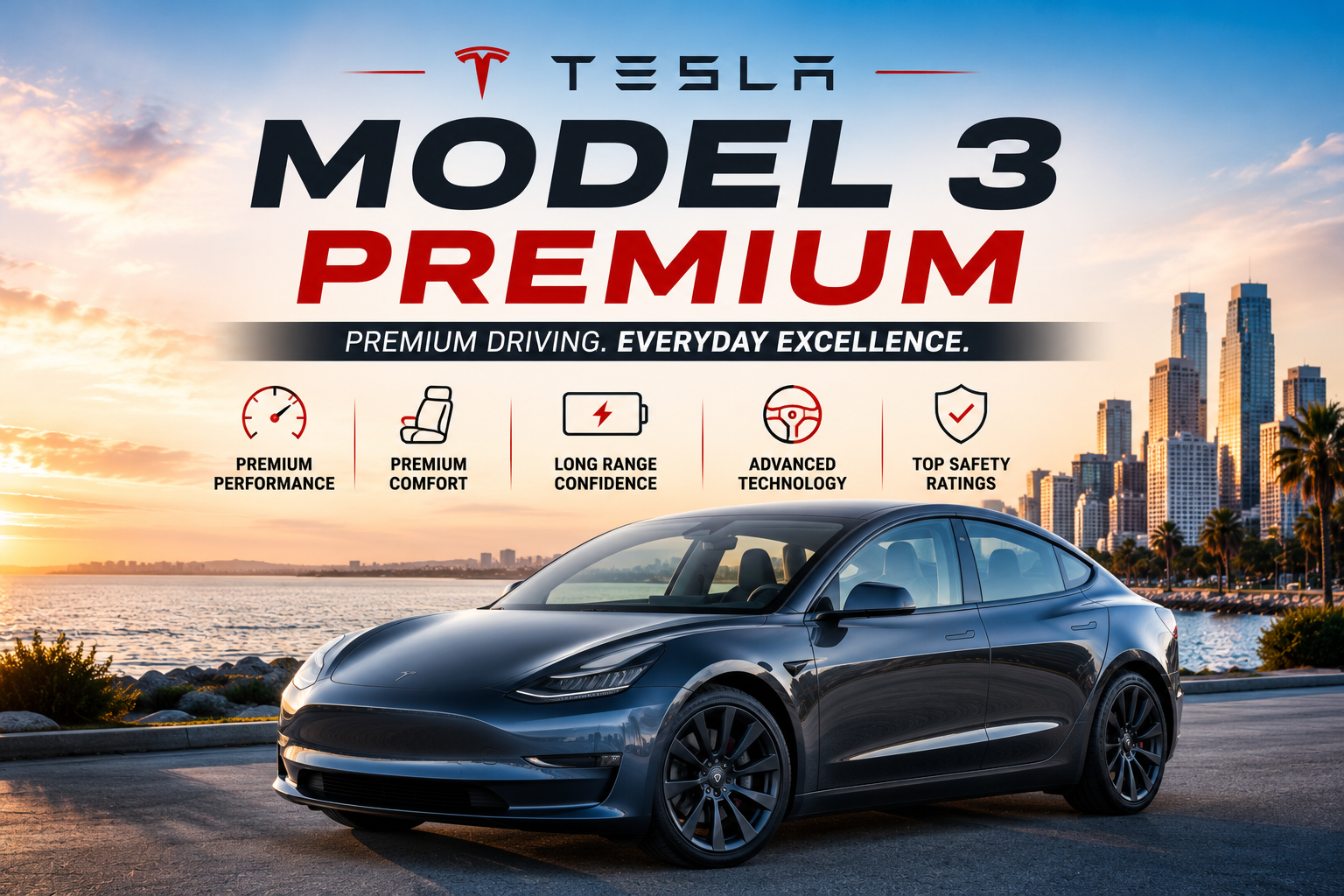
A focused look at Premium RWD and Premium AWD, including what the Premium name means, which features justify the price, and which version fits most US buyers
| Specification | Premium RWD | Premium AWD |
| Starting MSRP with fees | $44,130 | $49,130 |
| Motors and drive | Single motor, rear-wheel drive | Dual motor, all-wheel drive |
| EPA-estimated range | 363 miles | 346 miles |
| Tesla 0 to 60 mph estimate | 4.9 seconds | 4.2 seconds |
| Maximum DC fast charging | Up to 250 kW | Up to 250 kW |
| Seating | 5 | 5 |
| Main buyer advantage | Longest range and lowest Premium price | Quicker acceleration and all-weather traction |
| Quick verdict
The Premium RWD is the strongest Model 3 value for most buyers because it combines the longest range, brisk acceleration, the fuller interior specification, and the lower price. Premium AWD is worth the extra $5,000 for drivers who regularly face snow, want stronger launch performance, or prefer the security of dual-motor traction. The Standard trim is cheaper, but it gives up comfort, technology, and 42 miles of rated range. |
Tesla Model 3 Premium is the 2026 name for the versions previously marketed as Long Range. It sits between the cost-cut Standard model and the much quicker Performance model, offering the more complete cabin, longer-distance battery capability, and either rear-wheel drive or dual-motor all-wheel drive.
The Premium label can be misleading because it is not merely an appearance package. It identifies the versions that restore many daily-use features removed from the Standard trim while preserving the quiet ride, updated suspension, streamlined body, and efficient electric powertrain that make the current Model 3 competitive.
What the Reference Specs Show
The supplied Car and Driver Model 3 specifications page lists the 2026 Premium RWD at $44,130, with rear-wheel drive, a single-speed transmission, 295 horsepower, 309 lb-ft of torque, a 113.2-inch wheelbase, and 21 cubic feet of rear trunk space. Its specification format is especially useful for buyers comparing dimensions, seating measurements, tires, brakes, and curb weight.
Tesla tends to emphasize range and acceleration rather than publishing a traditional horsepower figure for every configuration. That is why motor-output numbers can differ across third-party data services. For purchase decisions, rated range, acceleration, drivetrain, charging rate, tire choice, and actual equipment are more useful than one claimed horsepower number.
2026 Model 3 Price Ladder
| Trim | Starting price | EPA range | 0 to 60 mph | Best reason to choose it |
| Standard RWD | $38,630 | 321 mi | 5.8 sec | Lowest entry price |
| Premium RWD | $44,130 | 363 mi | 4.9 sec | Best range and value balance |
| Premium AWD | $49,130 | 346 mi | 4.2 sec | Traction and stronger acceleration |
| Performance AWD | $56,630 | 309 mi | About 2.9 sec | Maximum speed and chassis capability |
The Premium RWD costs $5,500 more than the Standard model. That premium buys 42 additional EPA-rated miles, a quicker factory acceleration estimate, and a more complete interior. The Premium AWD adds another $5,000, trades 17 miles of rated range for dual-motor traction, and cuts the claimed 0 to 60 mph time by 0.7 second.
| Best value point
Premium RWD delivers the largest practical upgrade for the money. Premium AWD is a use-case purchase rather than an automatic step up. Buyers in mild climates who do not need maximum acceleration can keep the extra $5,000 and gain the longest range in the lineup. |
Range and Charging
The 363-mile EPA estimate is the Premium RWD model’s headline advantage. In Car and Driver’s 75-mph highway testing of the earlier Long Range RWD configuration, the sedan covered about 310 miles. That gap is normal for EVs because sustained highway speed, cold temperatures, strong wind, elevation changes, cabin heating, and larger wheels can reduce range.
Premium AWD is rated at 346 miles, which remains enough for long regional trips but provides a smaller buffer than RWD. Both Premium versions can accept up to 250 kW at a compatible DC fast charger. Peak power is only part of the charging experience, since battery temperature, state of charge, charger condition, and the charging curve determine how quickly useful miles are added.
- Choose 18-inch wheels when range, tire cost, and ride comfort are priorities.
- Install reliable home Level 2 charging when possible rather than depending on public fast charging for normal use.
- Plan road-trip stops with a reserve because the EPA number is not a guaranteed highway result.
- Expect winter range to fall, especially on short trips where the battery and cabin repeatedly need heating.
Performance and Driving Experience
Premium RWD is already quick enough for everyday driving. Tesla estimates 4.9 seconds to 60 mph, while instrumented testing of the equivalent long-range rear-drive car has been quicker. Power arrives immediately and smoothly, and the low-mounted battery helps the sedan feel planted through curves.
Premium AWD feels substantially stronger from a stop because both motors can deliver torque. Its 4.2-second factory estimate places it near many gasoline sport sedans without the firmer suspension, specialized tires, and range penalty of the Performance model. AWD also improves launch traction in poor weather, although winter tires remain important for braking and cornering on snow or ice.
The current Model 3 is quieter and more compliant than earlier versions. The steering remains quick and accurate, but drivers who want conventional gauges, physical climate buttons, or a separate instrument panel may need time to adapt to Tesla’s center-screen layout.
Interior, Comfort, and Cargo
| Area | Premium strengths | Important limitation |
| Front seats | Power adjustment, supportive shape, and more complete heating and ventilation features than Standard | Seat comfort should still be tested personally |
| Rear seat | Dedicated 8-inch display for climate and entertainment functions | Low cushion position and modest adult leg comfort |
| Cargo | 21-cu-ft rear trunk plus roughly 3 cu ft in the front trunk | Sedan opening is less flexible than a hatchback or crossover |
| Cabin design | Quiet, minimalist, and improved materials compared with older Model 3s | Almost every function runs through the center display |
| Phone integration | Strong native navigation and streaming ecosystem | No Apple CarPlay or Android Auto |
The 15.4-inch center touchscreen controls navigation, audio, climate, vehicle settings, and many driving functions. Premium models also retain the rear display that the Standard trim deletes. The design looks clean and modern, but buyers should test common tasks while parked to decide whether screen dependence is acceptable.
Check the Live Configuration Before Ordering
Tesla changes prices, wheel choices, colors, financing offers, and included software more often than most automakers. Review the official Tesla Model 3 page immediately before placing an order. Confirm the exact EPA range shown for the selected wheels, destination and order charges, delivery estimate, interior color cost, driver-assistance software, and any state or utility incentive that applies to your address.
Safety, Driver Assistance, and Warranty
The Model 3 includes automatic emergency braking, lane-departure warning, adaptive cruise functions, and camera-based driver assistance. Some advanced capabilities depend on software package and current Tesla policy. These systems require active supervision and do not make the car autonomous.
Basic vehicle coverage is four years or 50,000 miles. Premium versions receive longer battery and drive-unit mileage coverage than the base version, generally eight years or 120,000 miles, subject to Tesla’s warranty terms and minimum battery-capacity provision. Buyers should read the current warranty document rather than relying only on a sales summary.
Is Premium Worth More Than Standard?
| Decision factor | Choose Standard | Choose Premium |
| Budget | Keeping the purchase price near $39,000 matters most | You can spend $5,500 more for comfort and range |
| Typical driving | Daily use is short and home charging is easy | Long highway trips or limited charging access are common |
| Cabin expectations | Manual adjustments and simpler materials are acceptable | Power adjustments, richer trim, and rear display matter |
| Driver assistance | Basic adaptive cruise capability is enough | The fuller lane-guidance feature set is preferred |
| Resale appeal | Lowest initial cost is the priority | Longer range and fuller equipment may attract more used buyers |
For many buyers, the Premium upgrade is easier to justify than the jump from Premium RWD to Premium AWD. The Standard still provides more than 300 miles of rated range, but its cost reductions are visible every day. Premium improves the parts of the car the owner touches and uses while also increasing long-distance flexibility.
Which Tesla Model 3 Premium Should You Buy?
- Buy Premium RWD for maximum range, lower price, home charging, and driving in a mild or moderate climate.
- Buy Premium AWD for frequent snow, steep roads, faster acceleration, or drivers who value dual-motor security more than 17 extra miles of rated range.
- Choose Standard only when the $5,500 saving matters more than the deleted comfort and technology features.
- Choose Performance when acceleration, adaptive suspension, brakes, and handling hardware matter more than range, price, and tire cost.
Frequently Asked Questions
What does Premium mean on the 2026 Model 3?
Premium is the new name for the former Long Range trims. It identifies the more fully equipped RWD and AWD versions above the Standard model.
How much does the Model 3 Premium cost?
Current listed prices are $44,130 for Premium RWD and $49,130 for Premium AWD, including the fees reflected in the cited specifications. Options, taxes, registration, and location-based charges are additional.
Which Model 3 Premium has the longest range?
Premium RWD has the highest EPA estimate at 363 miles. Premium AWD is rated at 346 miles.
Is Premium AWD worth $5,000 more?
It is worth considering for snow, steep terrain, and stronger acceleration. Drivers in mild climates who prioritize range and value will usually be better served by Premium RWD.
Does the Model 3 support Apple CarPlay or Android Auto?
No. Tesla uses its own infotainment, navigation, voice, streaming, and phone-connectivity system.
How much cargo space does it have?
The rear trunk is listed at 21 cubic feet, and the front trunk adds about 3 cubic feet, producing roughly 24 cubic feet of total storage before folding the rear seats.
Final Verdict
The Tesla Model 3 Premium is the lineup sweet spot. Premium RWD delivers the best range and value, while Premium AWD trades some range and $5,000 for stronger traction and acceleration.


Comments